
2026-07-27
Choosing a fertilizer granulator depends on two main factors: the characteristics of the raw materials and the desired shape of the finished product. It also requires consideration of production scale, investment budget, and other factors. Currently, the mainstream fertilizer granulation equipment on the market includes three types: disc granulators, rotary drum granulators, and double-roller extrusion granulators, each suitable for different application scenarios.
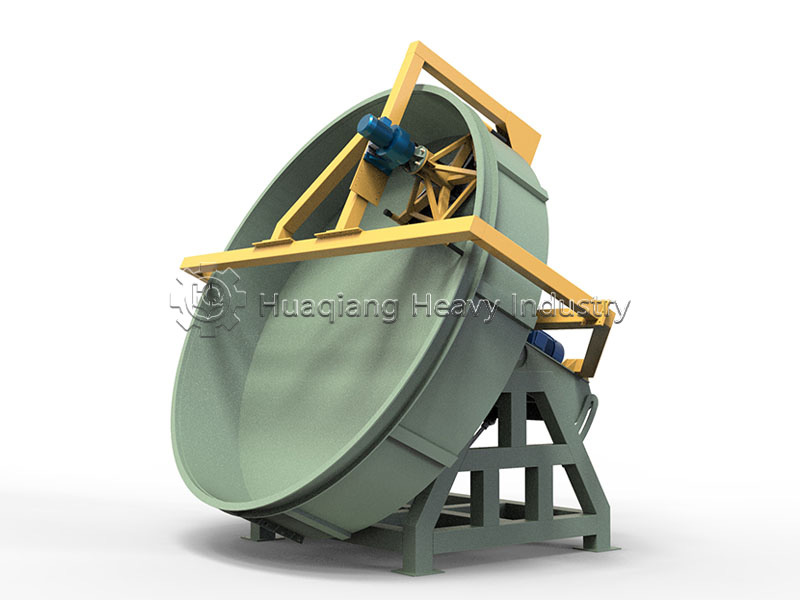
I. Disc Granulator – Suitable for Multi-variety, Small-Batch Production
Disc granulators rely on the rolling inertia of materials on an inclined disc to form spherical pellets. The pellet size can be flexibly controlled by adjusting the disc's inclination angle and the amount of water added. Its advantages include simple structure, low investment threshold, and intuitive operation. This type of machine is suitable for fermentation raw materials that are mainly in powder form, especially suitable for small to medium-sized production lines with an annual output of 10,000–30,000 tons. However, its single-unit output is relatively low (0.5–3 tons per hour), the equipment is difficult to seal, and dust is prone to spillage.
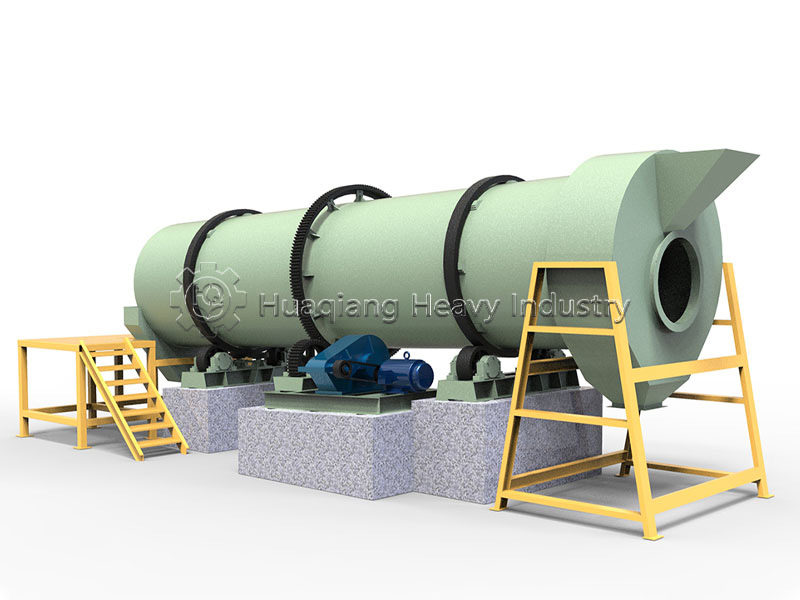
II. Rotary Drum Granulator – Suitable for Large-Scale Continuous Production
The rotary drum granulator uses a wet granulation process, where water or steam is used to moisten the material inside the drum, causing it to agglomerate into spheres. Its key advantages are its massive single-machine capacity, ranging from 5 to 30 tons per hour, and over 200 tons per day. The spheres produced have high strength, good uniformity, excellent sealing, and are easy to automate. This model is the preferred choice for large-scale fertilizer production bases with an annual output of over 50,000 tons. The disadvantage is the need for a large supporting dryer and cooler, resulting in relatively high energy consumption.

III. Double Roller Extrusion Granulator – Suitable for Dry Powder Granulation Without Water Addition
The double roller extrusion granulator uses a dry extrusion process, directly pressing dry powder materials into shape using double rollers under high pressure. Its biggest advantages are the elimination of the need for water addition, binders, and subsequent drying, resulting in a shorter process flow and lower energy consumption. Particle shapes can be customized according to the roller skin's ball sockets, including pillow-shaped, flat spherical, and rod-shaped options. This model is particularly suitable for dry powdery materials with extremely low moisture content (typically below 15%), as well as heat-sensitive raw materials that are easily decomposed by water. However, the resulting granules are relatively irregular in shape.
| Model Type | Applicable Production Scale | Finished Product Shape | Core Advantages | Main Limitations |
|---|---|---|---|---|
| Disc Granulator | Medium & Small Scale (10,000–30,000 tons/year) | Spherical pellets | Low investment, intuitive operation | Low output, heavy dust generation |
| Rotary Drum Granulator | Large Scale (Over 50,000 tons/year) | Spherical pellets | Huge production capacity, high automation level | Supporting drying equipment required, high energy consumption |
| Double Roller Extrusion Granulator | Medium & Small Scale | Customizable (pillow shape, flat spherical shape, etc.) | No water addition & drying required, energy-saving & eco-friendly | Slightly irregular particle shape |
In actual selection, it is recommended to first rigorously evaluate the moisture content, fiber content, binding properties, and final granule morphology requirements of the raw materials. If necessary, conduct small-scale tests to confirm that the granulation rate and granule strength meet the standards before making a scientific decision based on the investment budget.
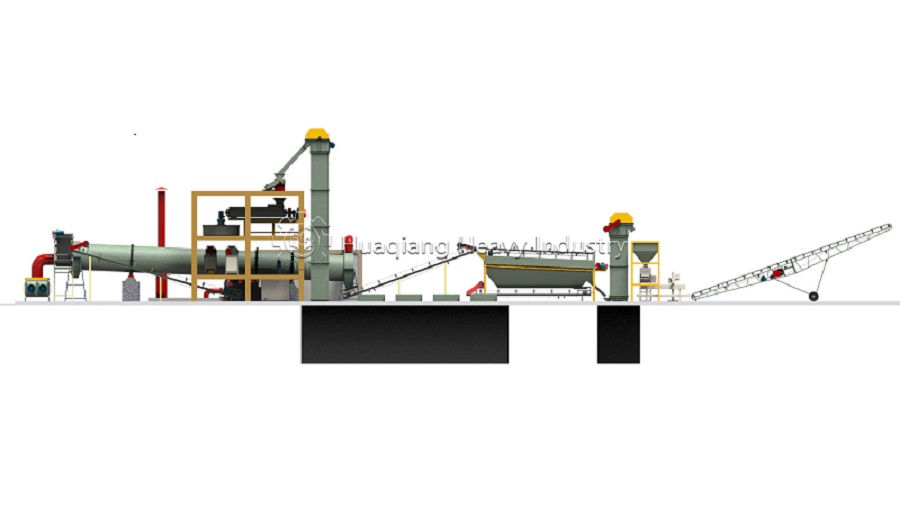
Matching Machine to Material – The Art of Granulation
Selecting the right granulator is not a one‑size‑fits‑all decision—it demands a deep understanding of both material behavior and production goals. For dry, heat‑sensitive powders with low moisture, the fertilizer compactor or fertilizer compaction machine (often a double‑roller extruder) excels in fertilizer granules compaction, producing dense, irregular pellets without any drying step—ideal for energy‑conscious plants. Conversely, when high throughput and spherical uniformity are critical for a large‑scale NPK fertilizer production line, the rotary drum granulator remains the industry workhorse, delivering robust, round granules with excellent mechanical strength.
For organic‑based feedstocks, the organic fertilizer granulator series—including disc, drum, and even the fertilizer flat die pellet machine—offers tailored solutions depending on fiber content, viscosity, and desired pellet shape. Flat die pelletizers, in particular, are gaining traction for small‑to‑medium organic lines due to their simplicity and ability to handle fibrous materials like composted manure or straw.
Ultimately, the best choice balances technical feasibility with economic viability. We strongly recommend conducting pilot tests with your actual raw materials to evaluate granulation rate, particle hardness, and energy consumption. A well‑chosen granulator not only boosts production efficiency but also enhances product marketability—whether you are producing high‑end coated NPK or premium organic pellets. In the end, the right machine transforms your raw materials into a consistent, saleable fertilizer that farmers trust.