
2026-07-30
Disc granulation (also known as disc granulation or pelletizing granulation) is a physical granulation technology that utilizes the combined effects of friction, centrifugal force, and gravity generated by the rotation of a tilted disc, combined with atomized spraying, to gradually bind the powder into rounded granules. This process is one of the most widely used granulation methods in the production of organic fertilizers, compound fertilizers, and blended fertilizers.
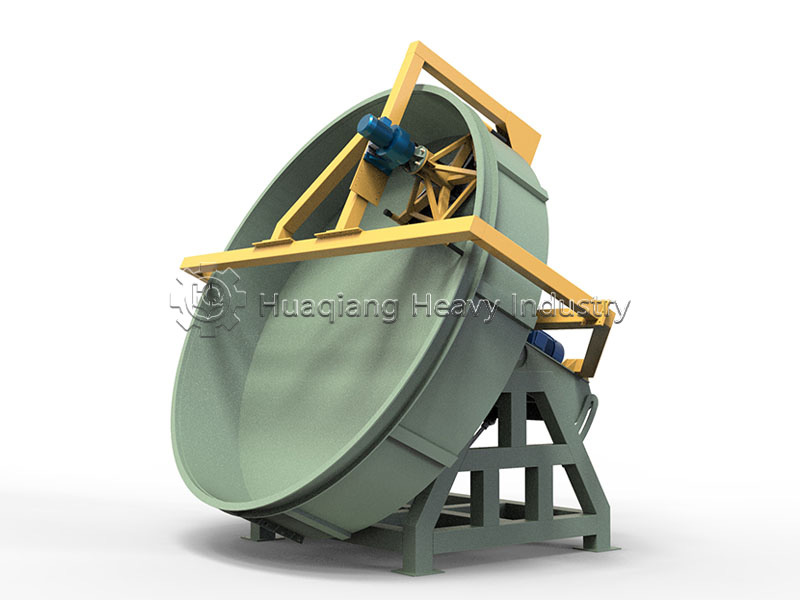
I. Working Principle and Granulation Process The core mechanism of disc granulation can be summarized as the “snowball effect.” Powdered raw materials are continuously fed into an inclined rotating disc (usually at an angle of 35°–55°) through the feed inlet. Simultaneously, nozzles above the disc spray atomized water or binder onto the material. The moistened powder is subjected to the combined action of three forces within the disc: friction causes the material to rise with the disc surface; gravity causes the material to roll downwards; and centrifugal force throws the material towards the edge of the disc. In the repeated cycles of rising, rolling, and being thrown out, materials adhere to each other and are layered, causing the particles to grow from small to large. Once the particles reach the set size, they automatically overflow from the edge of the disc. The entire process is divided into three stages: nucleus formation, growth, and completion.
II. Core Advantages The outstanding advantages of disc granulation technology are reflected in five aspects:
High Granulation Rate: The granulation rate can reach over 93%, and some high-quality models can even reach 95%, resulting in extremely high raw material utilization.
Excellent Particle Quality: The finished particles are round and full, with a smooth surface and moderate hardness, ensuring even application during fertilization, minimizing dust generation, and exhibiting good solubility.
Flexible and Controllable Particle Size: By adjusting parameters such as disc tilt angle, rotation speed, and water spray volume, the particle size range of the finished particles can be flexibly controlled.
Intuitive and Simple Operation: The equipment structure is simple, and parameters can be adjusted at any time during the granulation process based on the granulation situation.
Low Investment Threshold: The equipment investment is relatively small, with a short payback period, making it particularly suitable for small and medium-sized fertilizer production enterprises.
III. Applicable Materials and Scenarios Disc granulation technology is widely applicable to the processing of spherical granules for bio-organic fertilizers, compound fertilizers, and blended fertilizers. Processable materials include various non-sticky materials in powder, granule, or small lump form, such as fermented livestock and poultry manure, composted straw, and inorganic fertilizer raw materials. For materials with insufficient viscosity, binders such as bentonite can be added to assist granulation.
IV. Key Process Parameters The main parameters affecting the disc granulation effect include: disc diameter, tilt angle (commonly 40°–50°), rotation speed (usually 50%–60% of the critical speed), disc edge height, water spraying method, and scraper position. The raw material moisture content is generally best controlled at 25%–35%. In actual production, targeted adjustments need to be made based on the characteristics of the raw materials.
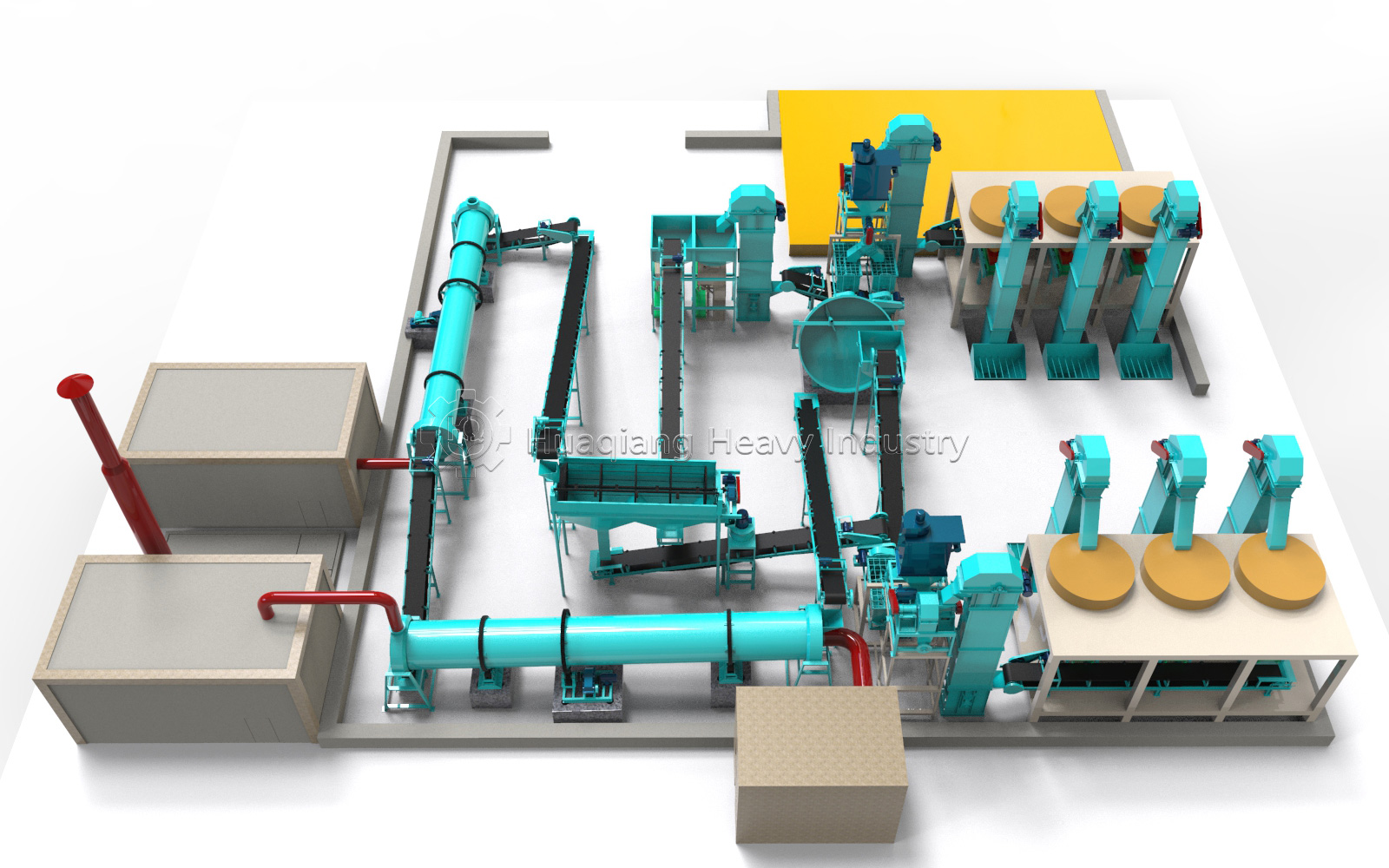
In summary, disc granulation, with its high granulation rate, excellent granule quality, flexible and controllable operation, and economical investment cost, has become one of the mainstream processes in fertilizer granulation, especially suitable for multi-variety, small-batch production scenarios.
Disc granulation is far more than a simple agglomeration technique — it is a versatile platform that bridges raw material diversity and final product performance. Within the organic fertilizer granulator series, the disc granulator machine stands out for its exceptional adaptability to both high‑moisture organic compost and dry inorganic salt blends. As part of modern fertilizer production machine technology, it offers a unique combination of high granulation rate (≥93%), adjustable particle size (2‑6 mm), and low energy consumption, making it ideal for small‑ to medium‑scale plants that frequently switch formulations. When integrated with bio-organic fertilizer production technology, the disc granulator operates at gentle, low‑temperature conditions — preserving heat‑sensitive microbial strains — while the addition of binders like bentonite ensures robust pellet formation without damaging live bacteria. For compound fertilizer production technology, the same machine can be tuned to produce dense, uniformly sized granules with excellent solubility, thanks to precise control over rotation speed, tilt angle, and spray rate. Moreover, the disc's open design allows real‑time visual inspection and on‑the‑fly parameter adjustments, enabling producers to respond instantly to moisture or particle size fluctuations. In essence, disc granulation is not a one‑size‑fits‑all solution, but a flexible core that, when combined with upstream composting and downstream screening, delivers superior spherical granules for both organic and compound fertilizer lines — a proven workhorse for sustainable, high‑quality fertilizer manufacturing.