
2026-03-18
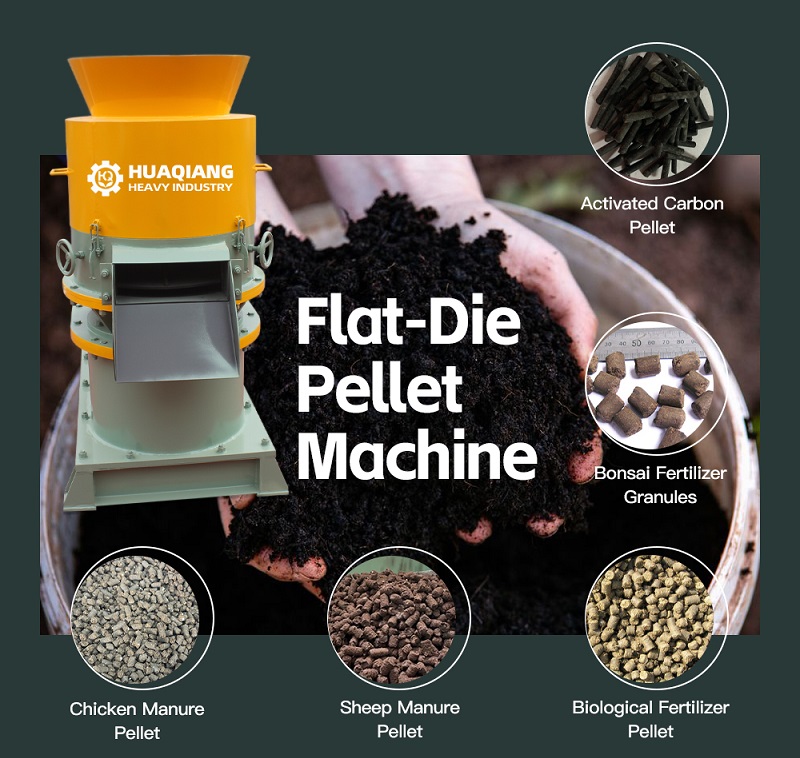
In organic fertilizer and biomass pellet production, flat die pelleting machine, with their simple structure, convenient operation, and moderate investment, have become core equipment in small and medium-sized production lines. However, the flat die and pressure roller, this "golden pair," are also the fastest-wearing components of the entire machine. Improper maintenance can lead to frequent problems such as die blockage, pressure roller jamming, and loose pellets, not only increasing maintenance costs but also plunging the entire production line into a cycle of frequent repairs and shutdowns. Mastering scientific maintenance techniques is key to ensuring continuous and efficient equipment output.
Identification of Vulnerable Components: Flat Die, Pressure Roller, Bearings
The core vulnerable components of the flat die pelleting machine are concentrated in the pelleting unit: the flat die bears the pressure and friction of the material; after long-term use, the die holes are prone to wear and deformation, resulting in pellet diameter deviation and reduced forming rate; the knurled surface of the pressure roller gradually wears down during repeated extrusion, losing its gripping force on the material, making discharge difficult; and the bearings, operating at high speed in dusty environments, are prone to burnout when lubrication is poor. The condition of these three factors directly determines the operational quality of the equipment.
Daily Maintenance Procedure: Before Start-up, During Operation, and After Shutdown
Before daily operation, three checks must be completed: Check that all bolts are tight to prevent loosening due to vibration; check the gap between the pressure roller and the die (standard 0.1-0.3mm) to ensure even force distribution; manually rotate the machine to confirm there is no jamming; preheat the die by running it unloaded for 2-3 minutes to avoid direct feeding when the machine is cold, which could cause die blockage.
During operation, closely monitor the uniformity of feeding—uneven feeding will accelerate pressure roller wear. Simultaneously observe the ammeter and the sound of material discharge; abnormal fluctuations may indicate material blockage or insufficient bearing lubrication.
Cleanup after shutdown is crucial. After production, an oil mixture (such as a mixture of waste cooking oil and sawdust) must be fed into the machine and run for 1-2 minutes to fill the die holes with oil, preventing residual material from drying and hardening, ensuring easy material discharge the next time the machine is started. At the same time, clean the carbon deposits on the pressure roller surface and remove any accumulated material from the hopper.
Key Maintenance Tips: Anti-clogging and Impurity Removal
Clogged die holes are the most troublesome problem for flat die pellet mills. Besides sealing the holes with oil before shutdown, the die hole patency should be checked weekly, and fine powder should be removed using a special cleaning needle. For severely clogged dies, they can be removed and softened by soaking in diesel fuel before cleaning.
Raw material purity control is equally crucial—install a magnetic separator to remove hard objects such as iron nails and stones from the raw materials to avoid damaging the flat die and pressure rollers. If the fibers in the raw materials are too long or the particles are too coarse, they need to be crushed to 2-5mm first.
Replacement Cycle of Vulnerable Parts: Data-Driven Timing
The lifespan of the flat die and pressure rollers depends on the abrasiveness of the raw materials and the duration of use. Referring to industry data: Under normal operating conditions, the flat die can run for 600-800 hours, and the pressure rollers for approximately 1000 hours. When the pellet forming rate decreases, the discharge slows significantly, or obvious wear steps are visible on the inner wall of the die hole, timely replacement is necessary. It is recommended to replace the flat die and pressure rollers in pairs to ensure proper clearance matching.
Bearing lubrication must strictly adhere to the prescribed schedule: apply high-temperature grease to the pressure roller bearings every 2 hours, and lubricate the main shaft front bearing every 4 hours. Replace the reducer lubricating oil after the first 500 hours of use, and thereafter every 1000 hours or every six months.
From daily cleaning to regular parts replacement, there are no shortcuts in the maintenance of flat die pelleting machines, but there are scientific principles to follow. Establishing standardized maintenance procedures to keep the equipment in optimal condition is the fundamental way to reduce overall costs and ensure continuous production.
The detailed maintenance guide for the flat die pelleting machine highlights its role as a key piece of equipment in small to medium-scale production, particularly for columnar fertilizer granulation technology. Its simple, robust design makes it a popular flat die press pellet machine for sale for organic fertilizer and biomass producers. However, it's important to understand its place within the broader family of granulation equipment. A rotary drum granulator or a disc granulator machine, for example, use completely different agglomeration principles and have their own unique maintenance requirements. A double roller press granulator, the core of a roller press granulator production line, also relies on mechanical pressure but with a different die and roller configuration, necessitating a different approach to wear part management. The principles of pre-startup checks, monitoring during operation, and post-shutdown cleaning apply universally, but the specific procedures—checking die-to-roller clearance on a flat die versus monitoring roller pressure on a double roller press granulator—are technology-specific. Mastering the maintenance of your chosen granulator, whether it's a simple flat die pelleting machine or a complex rotary drum granulator, is the key to maximizing its lifespan and ensuring consistent, high-quality production.