
2026-03-02
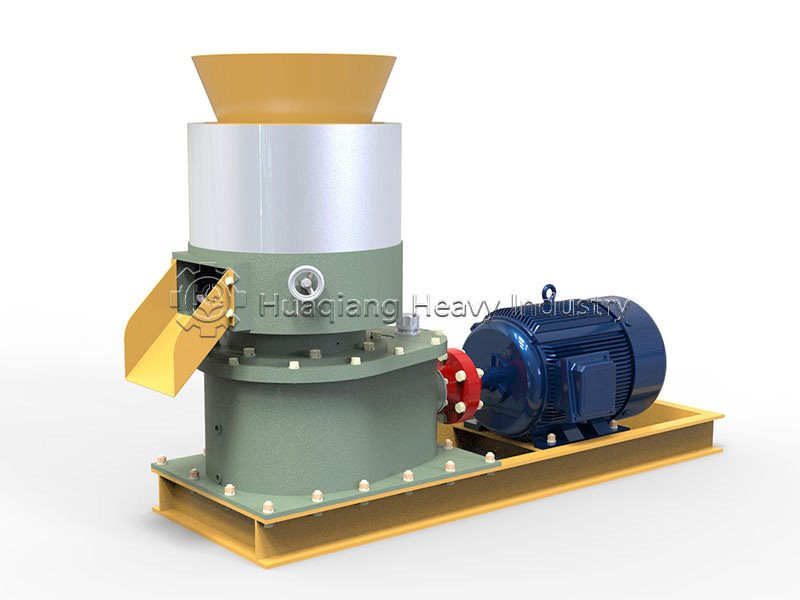
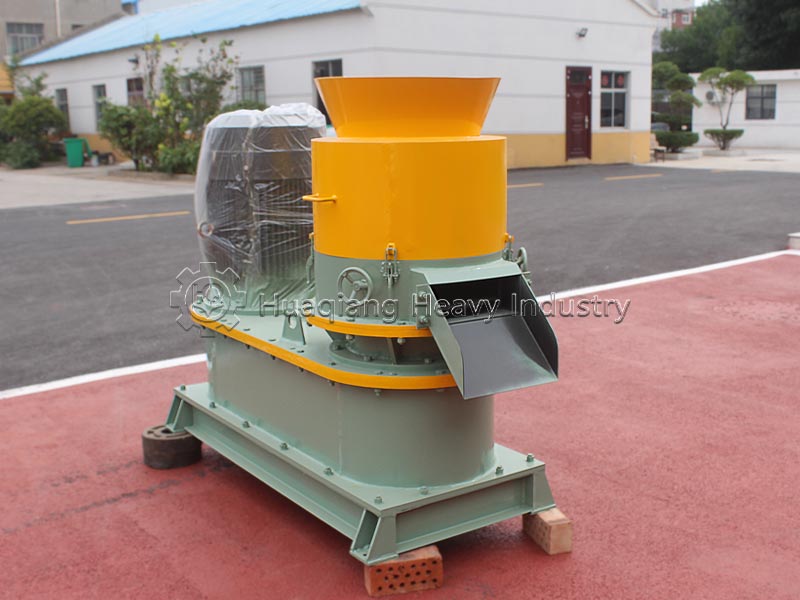
In most people's minds, flat die pelleting machines seem to be "exclusively for organic fertilizer production." However, this highly efficient equipment, relying on room-temperature extrusion molding, has applications far beyond that—from feed to biomass energy, from chemical raw materials to pharmaceutical excipients, the flat die pelleting machine, with its unique "multi-functional" advantage, is becoming a core piece of equipment for many small and medium-sized enterprises producing multiple products. This article will take you into the three core industries of fertilizer, feed, and biomass energy to explore the vast world of columnar pellets.
Fertilizer Industry: More Than Just Organic Fertilizer
In the fertilizer field, the columnar pellets produced by flat die pelleting machines are extending from ordinary organic fertilizer to high-value-added products: Slow/Controlled-Release Fertilizer: The naturally dense structure of columnar pellets gives them the characteristic of slowly releasing nutrients. By adjusting the die diameter (2-8mm) and raw material ratio, slow/controlled-release fertilizers with different release cycles can be produced. Large pellets (6-8mm) for corn and small pellets (2-4mm) for vegetables truly achieve "customization on demand." Compound Microbial Fertilizer: The ambient temperature granulation process perfectly preserves the activity of functional bacteria, resulting in a live bacteria count of over 200 million per gram, far exceeding national standards. After the columnar granules are applied to the soil, microorganisms are slowly released along with the granules, leading to better colonization.
Organic-Inorganic Compound Fertilizer: Well-rotted organic fertilizer is mixed with inorganic raw materials such as urea and ammonium phosphate in a specific ratio and then granulated. The columnar granules perfectly combine the slow-release characteristics of organic matter with the rapid-acting properties of inorganic fertilizers, resulting in a more comprehensive fertilizer effect.
The KP series flat die pelleting machine maintains a stable forming rate of over 95% in the fertilizer industry, with multiple specifications available from 0.5 tons to 5 tons per hour, meeting the different production capacity needs of everything from family farms to professional fertilizer plants.
Feed Industry: Improving Digestibility and Reducing Waste
In the feed processing field, flat die pelleting machines are becoming standard equipment in more and more farms:
Pellet Feed Production: Corn, soybean meal, fishmeal, premixes, etc., are mixed according to a formula and then extruded into columnar pellets using a flat die pelleting machine. High pellet hardness and low pulverization rate result in almost no powder generation during transportation and feeding, reducing feed waste by more than 20%.
Improved palatability: The slight gelatinization effect during extrusion imparts a natural grain aroma to the feed, significantly increasing livestock and poultry appetite. Pelleted feed is also easier for young and weak animals to digest and absorb.
Nutritional preservation: Room temperature pelleting avoids the loss of vitamins and enzymes caused by high-temperature steam pelleting, resulting in higher nutritional value.
From pig feed and chicken feed to fish feed and rabbit feed, a single machine can meet the production needs of all feed categories simply by changing the flat die with different aperture sizes (typically 3-6mm for livestock and poultry, and 2-4mm for aquaculture).
Biomass energy: A convenient path to green fuel. Under the "dual carbon" background, the demand for biomass pellet fuel has surged, making flat die pellet mills an ideal choice for small and medium-sized biomass fuel plants: Wide range of raw materials: Wood chips, sawdust, rice husks, straw, peanut shells, empty palm fruit bunches—flat die pellet mills can process any fibrous biomass. Raw materials, after being crushed to 3-5mm and with a moisture content controlled at 15%-20%, can be directly granulated.
No drying required: The room-temperature extrusion process of the flat die pelleting machine is highly adaptable to raw material moisture content (10%-25%). When the raw material moisture content is suitable, the drying process can be eliminated, significantly reducing fuel production energy consumption.
Superior pellet quality: The extruded cylindrical pellets have a density of 1.0-1.3g/cm³, high calorific value, complete combustion, and low ash content. 6-10mm diameter cylindrical pellets are the "standard feed" for biomass boilers and household pellet stoves.
Chemical and Pharmaceutical Industries: Potential Areas for Fine Granulation
While the application of flat die pelleting machines in the chemical and pharmaceutical industries is not as widespread as in the previous three sectors, their potential should not be underestimated:
Chemical Additives: Compressing plastic masterbatches, rubber additives, catalyst powders, etc., into cylindrical pellets not only reduces dust but also facilitates metering and feeding.
Pharmaceutical Excipients: Granulation of pharmaceutical starch, dextrin, microcrystalline cellulose, and other excipients improves flowability, resulting in higher uniformity in tablet compression or capsule filling.
Multi-functional: Small Investment, Big Market Access
The greatest appeal of the flat die pelleting machine lies in its "flexible switching"—from organic fertilizer to feed, from biomass fuel to chemical pellets, all you need to do is:
Change the die: Select the die with the corresponding hole according to the target pellet diameter.
Adjust parameters: Adjust the pressure roller gap (0.1-0.5mm) and spindle speed.
Optimize the formula: Fine-tune moisture and grinding fineness according to raw material characteristics.
One machine can meet the production needs of multiple product categories. For small and medium-sized enterprises (SMEs), this means that with minimal equipment investment, they can switch product directions at any time according to market trends—producing feed when fertilizer sales are sluggish, and switching to biomass fuel when feed demand declines. Equipment utilization is significantly improved, and investment risk is significantly reduced.
The Transition from Organic Fertilizer to Biomass Fuel
A small enterprise in Hebei Province, originally focused on producing organic fertilizer, discovered a strong demand for pelleted feed from surrounding livestock farmers after purchasing a Huaqiang flat die pelleting machine. They quickly adjusted their strategy, using the same equipment to process abundant local corn and soybean meal into pig pellets, recouping their investment in just six months. The following winter, when biomass fuel prices surged, they used the same equipment to process sawdust and straw into pellet fuel, seizing another market opportunity. The person in charge remarked, "One machine, used in three industries over three years—that's true multi-purpose functionality." From slow-release fertilizers to improved feed digestibility, and then to the green substitution of biomass energy—the flat die pellet mill, with its unique room-temperature extrusion process, transforms powdery materials into high-value cylindrical pellets, writing a brilliant chapter in cross-industry applications. If you also want to leverage one machine to access multiple markets, the flat die pellet mill deserves your close attention.
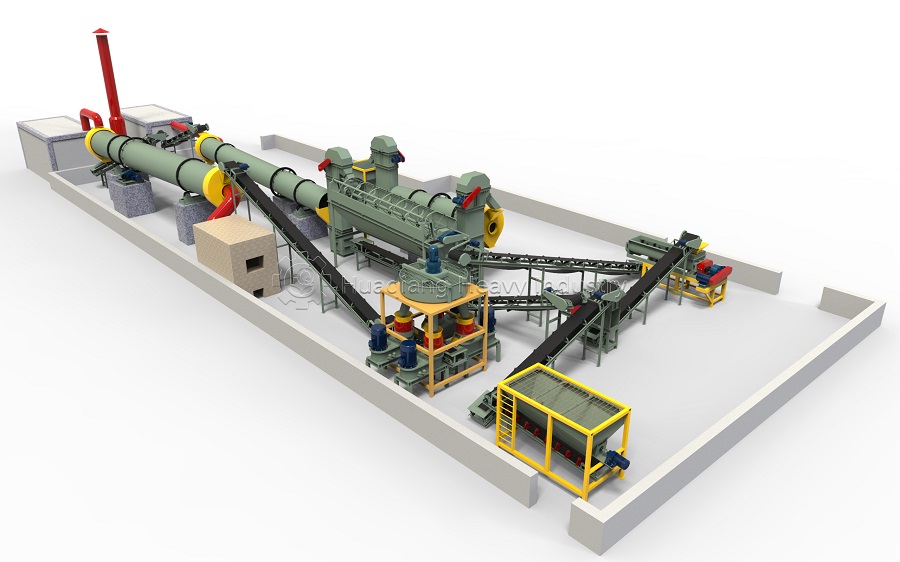
The remarkable versatility of the flat die pelleting machine highlights a unique niche within the broader spectrum of fertilizer granulation technology. Unlike the wet agglomeration of a rotary drum granulator or the tumbling action of a disc granulator machine, the flat die achieves fertilizer granules compaction through a simple, robust extrusion process. It is a specific type of compactor, distinct from a high-capacity roller press granulator production line but sharing the core principle of dry, room-temperature forming. Its ability to transform a wide array of powdered materials—from organic wastes to feed ingredients and biomass—into dense, uniform cylindrical pellets makes it an incredibly flexible tool. For a small business, one flat die pelleting machine can serve multiple markets: producing slow-release organic fertilizer pellets one day, high-density biomass fuel the next, and pelleted animal feed the following week. This adaptability, combined with its low investment cost, makes it an ideal entry point for entrepreneurs looking to explore the world of granular products.